

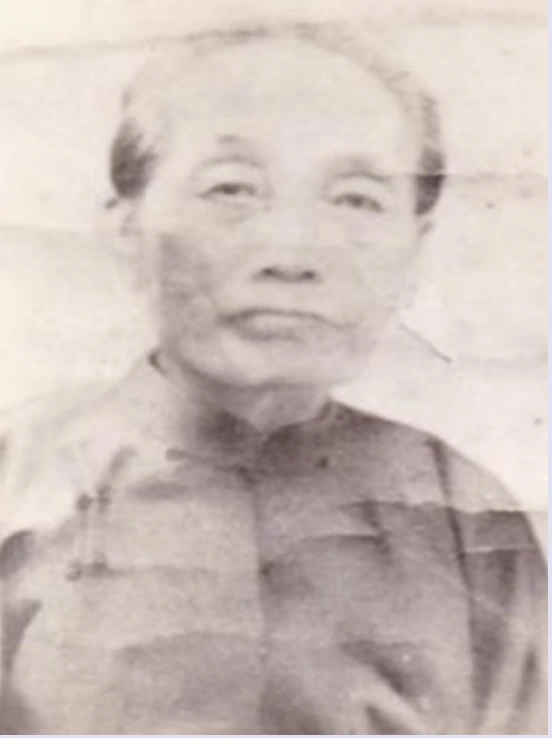
蔡碧吟(1874–1939),名葉詩,人稱蔡姑娘而不名,臺灣臺南人。其父為前清舉人蔡國琳,名門望族,書香世家。幼承庭訓,工詩文書法。夫婿羅秀惠亦為府城著名仕紳,以書名家。擅長柳公權正書,為日治時期府城著名之女性詩人、少見之女性書家,自號赤崁女史,被視為臺灣早期女性文人代表之一。1976年與其夫羅秀惠同被臺南市政府列為「清代臺南府城十大書家」。
Tsai Bi-yin (1874-1939), born Tsai Ye-shi, was a native of Tainan, Taiwan. She was widely known as “Miss Tsai” rather than by her given name. Her father, Tsai Guo-lin, earned the juren degree during the Qing imperial examinations, and the family was prominent and steeped in scholarly tradition. Educated at home from an early age, Tsai mastered poetry, prose, and calligraphy, eventually specializing in the regular script (kaishu) style of master Liu Gong-quan. Her husband, Luo Xiu-hui, was also a prominent Tainan gentry member and celebrated calligrapher. During the Japanese colonial period, Tsai gained renown as an acclaimed poet and one of the rare female calligraphers in Tainan. Adopting the literary sobriquet “Woman Scholar of Chihkan,” she is regarded as a key figure among Taiwan’s early female literati. In 1976, the Tainan City Government officially honored both Tsai and her husband among the “Ten Great Calligraphers of Qing-Era Tainan.”
《楷書對聯》,為蔡碧吟1924年書法作品。筆力遒健,結字匀整有度,溫潤而有秀穎之氣。對聯原句作者已佚,最早見錄於清代《兩般秋雨盦隨筆》。黃子久係元代畫家黃公望(1269–1354),文句取「芥子納須彌」意涵:拳石雖小卻能容納大師的山水氣象,瓶中的丁香讓書齋充滿文人雅趣。釋文:拳石畫臨黃子久,膽瓶花插紫丁香。款:時甲子冬月穀旦,臺南蔡碧吟女史。印:蔡氏葉詩。碧吟女史。
Couplet in Regular Script is a calligraphic work by Tsai Bi-yin, created in 1924. The brushwork is vigorous and assured, with evenly proportioned and impeccably structured characters that lend the composition a sense of warmth, poise, and subtle vitality. The original author of the couplet remains unknown, though its earliest recorded appearance is found in the Qing dynasty literary miscellany Jottings from the Studio of Two Autumn Rains. The verse refers to Huang Zi-jiu, the courtesy name of the renowned Yuan dynasty painter Huang Gong-wang (1269-1354). The first line evokes the Buddhist metaphor of Mount Sumeru contained within a single mustard seed, suggesting that even a fist-sized miniature rock can embody the sweeping scale of a master’s landscape. In the second line, lilacs arranged in a vase fill the scholar’s studio with an atmosphere of refined literati elegance.
法書 1924 | 縱136 橫32公分 | 2002年入藏 | 國立歷史博物館 | 典藏編號91–00177
Calligraphy, 1924 | 136 × 32 cm | Acquired in 2002 | Collection of the National Museum of History | Accession No. 91-00177
《楷書對聯》
Couplet in Regular Script
