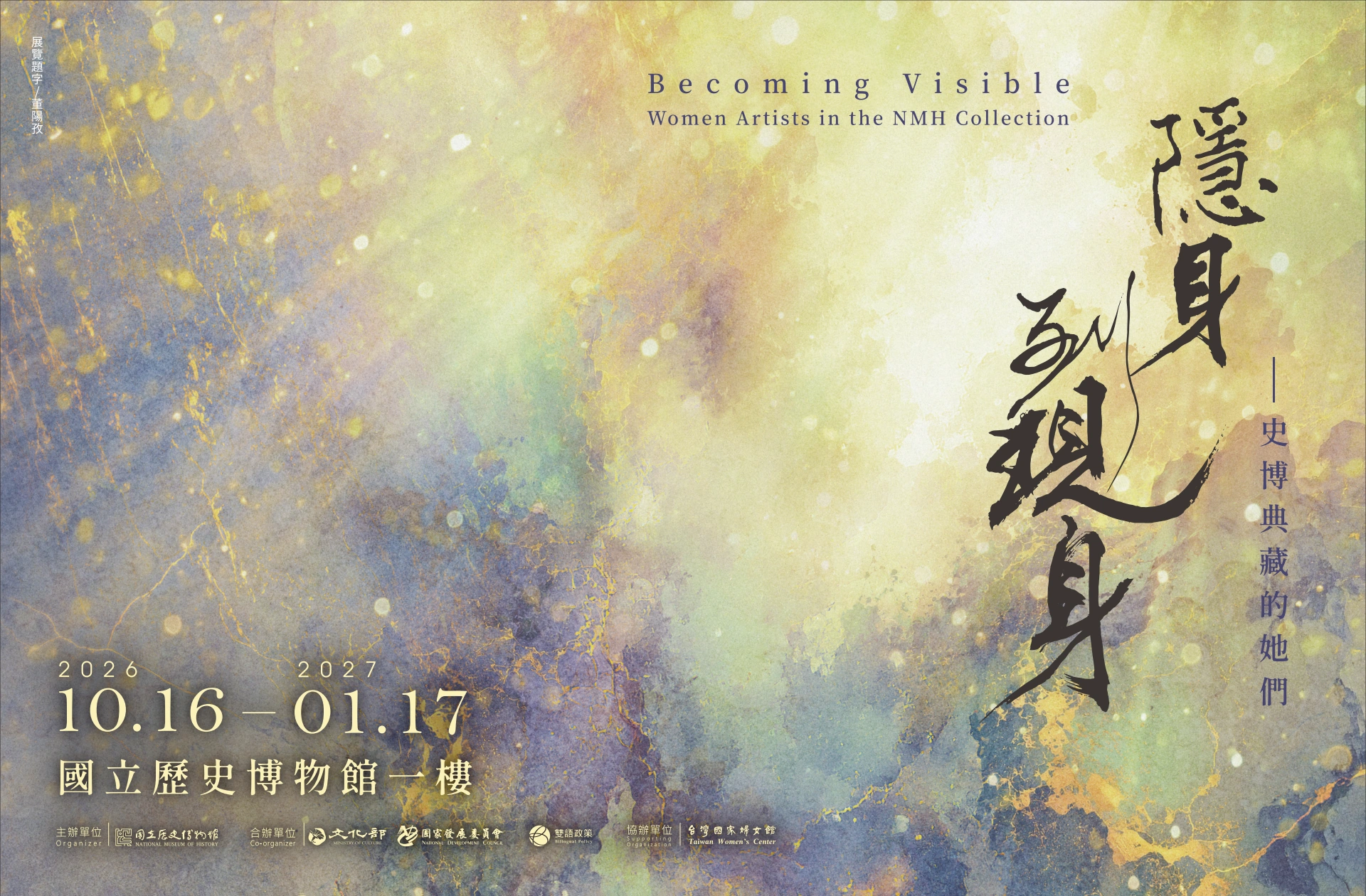
隱身到現身——史博典藏的她們 Becoming Visible: Women Artists in the NMH Collection
回溯20世紀臺灣女性藝術的百年發展,是一段由「被觀看的客體」走向「發言主體」的精采歷程。為呈現這段過程,本館精選典藏60位女性藝術家及其作品,以此為核心梳理她們的創作軌跡,彰顯其如何在時代框架中突破限制,從幽微到自覺,從隱身到現身,逐步建構創作主體與藝術語彙,共同譜寫各具風華的臺灣美術史,於典藏系譜中留下歷史印記。
展覽內容涵蓋水墨、書法、西畫等具象與抽象作品60件,依循臺灣女性藝術發展脈絡,分三個單元展開敘事:「歷史回溯・新時代女性藝術的先行者」、「典雅・遞嬗—傳統延續與風格轉向」及「現代・涵融—自我突破與藝術書寫」,展現館藏跨世代女性藝術家創作的豐富面貌及現代性。
本次特展承蒙展出藝術家及其家屬支持,並與國家發展委員會合作推動友善雙語環境計畫,及獲台灣國家婦女館協辦推廣,特申謝忱。期望透過此展傳達藝術超越性別的價值,開啟觀者與她們的對話,並體現博物館多元共融的文化視域。
Becoming Visible
Women Artists in the NMH Collection
The history of women’s art in 20th-century Taiwan marks a compelling shift from “objects of observation” to “autonomous voices.” To trace this dynamic evolution, the National Museum of History features 60 women artists and selected works from its collection. By illuminating their creative trajectories, the exhibition underscores how these artists transcended the constraints of their times—moving from subtle expression to self-awareness, and from invisibility to presence. In doing so, they established their distinct artistic vocabularies, shaping Taiwanese art history while leaving an indelible mark on the museum’s collection.
Featuring 60 figurative and abstract works in ink, calligraphy, and Western painting, the exhibition unfolds across three thematic narrative arcs: “Historical Retrospect: Pioneers of a New Era in Women’s Art,” “Elegance and Transition: Tradition and Stylistic Evolution,” and “Modernity and Integration: Personal Breakthroughs and Artistic Expression.” Together, these narrative threads highlight the rich creativity across generations of women artists and the modernity of their practices.
The National Museum of History extends its heartfelt gratitude to the featured artists and their families for their support, to the National Development Council for its collaboration on the friendly bilingual environment program, and to the Taiwan Women’s Center for co-organizing the outreach efforts. Through this exhibition, the museum hopes to convey how the value of art transcends gender, invite visitors into meaningful dialogue with these artists, and embody the museum’s inclusive cultural vision.
